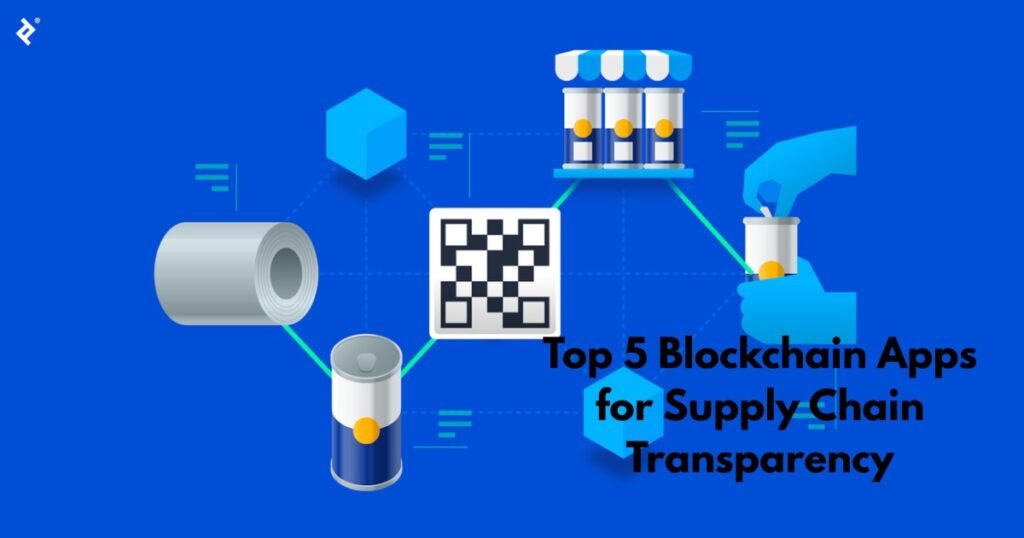
Meta Description: Discover the top 5 blockchain apps for supply chain transparency in 2026. Compare IBM, VeChain, and more to ensure compliance with FSMA 204 and EU DPP rules.
In 2026, the global supply chain is no longer just about moving a product from point A to point B; it is about proving the integrity of that journey. With the full implementation of the EU Digital Product Passport (DPP) and the approaching deadlines for the U.S. FDA’s FSMA Rule 204, transparency has shifted from a “nice-to-have” marketing feature to a non-negotiable legal requirement.
Traditional tracking systems often fail because they rely on centralized databases that are prone to human error or intentional tampering. Blockchain—or Distributed Ledger Technology (DLT)—solves this by creating an immutable audit trail. This means that once a piece of data, such as a temperature reading or a certificate of origin, is recorded, it cannot be altered without the consensus of the network.
Whether you are a logistics manager at a Fortune 500 company or a conscious consumer wanting to verify the “fair trade” status of your coffee, choosing the right platform is critical. Here are the top five blockchain apps leading the transparency revolution in 2026.
1. IBM Food Trust: The Enterprise Standard for Food Safety
IBM Food Trust remains the dominant force for global food supply chains. Built on the Hyperledger Fabric framework (a permissioned blockchain), it is designed specifically for the rigorous demands of the food and beverage industry.
Why It Matters for 2026
With the FDA’s FSMA 204 requiring companies to provide traceability data within 24 hours of a request, IBM Food Trust’s ability to perform “instant recalls” is a lifesaver. It allows retailers like Walmart and Carrefour to trace a single bag of spinach back to its specific farm in 2.2 seconds—a process that used to take nearly a week.
-
Key Features: Granular tracking of Critical Tracking Events (CTEs) and Key Data Elements (KDEs), GS1 standard compatibility, and temperature-sensitive cold chain monitoring.
-
Best For: Large-scale grocery chains, global agricultural exporters, and pharmaceutical companies requiring a private, secure environment.
-
Pricing: Enterprise-level subscription model, typically starting in the mid-five figures annually for full integration.
2. VeChain ToolChain: The Leader in Luxury and Authenticity
VeChain has successfully bridged the gap between physical goods and the digital world through its advanced IoT-blockchain integration. By using NFC chips, RFID tags, and QR codes, VeChain creates a “digital twin” for every item.
The Anti-Counterfeiting Edge
For the fashion and automotive industries, VeChain is the primary weapon against fraud. A consumer in 2026 can scan a luxury handbag’s NFC tag with their smartphone and instantly see the bag’s entire history on the VeChainThor blockchain—verifying it isn’t a high-quality replica.
-
Key Features: Turnkey “Blockchain-as-a-Service” (BaaS) model, low transaction costs via a two-token system (VET/VTHO), and extensive partnerships with DNV and PwC for third-party auditing.
-
Best For: High-end retail, wine and spirits, automotive parts, and ESG sustainability reporting.
-
Pricing: Tiered SaaS model, making it accessible for mid-sized companies wanting professional-grade anti-counterfeiting.
3. Provenance: The Choice for Purpose-Led Brands
While other platforms focus on the “how,” Provenance focuses on the “what” and “who.” It is a platform built for transparency marketing, helping brands prove their sustainability claims directly to the consumer at the point of sale.
Satisfying the Modern Shopper
Provenance uses blockchain to validate “Impact Claims”—such as “Carbon Neutral,” “Vegan,” or “Living Wage.” This data is then surfaced through “Proof Points” on e-commerce pages, allowing mixed audiences (B2B buyers and B2C shoppers) to make ethical decisions based on verified data rather than marketing fluff.
-
Key Features: Consumer-facing transparency widgets, rigorous verification frameworks, and alignment with B-Corp standards.
-
Best For: D2C brands, fair-trade beauty products, and sustainable fashion labels.
-
Pricing: Highly competitive for SMEs, starting with basic transparency modules.
4. Everledger: Securing High-Value and Conflict-Prone Assets
Everledger made its name by tracking the provenance of diamonds to ensure they were “conflict-free.” Today, it has expanded into the circular economy, tracking the lifecycle of EV batteries and critical minerals.
Regulatory Compliance in 2026
As the EU Battery Regulation comes into full effect, Everledger’s Battery Passport is essential for manufacturers. It tracks the raw materials (cobalt, lithium) from the mine, through the production phase, and eventually to the recycling center, ensuring the “right to be forgotten” for sensitive data while maintaining the integrity of the recycling trail.
-
Key Features: Digital identity for high-value assets, AI-integrated image recognition for physical verification, and deep expertise in mining and jewelry compliance.
-
Best For: Mining companies, jewelry retailers, and EV manufacturers.
5. OriginTrail: The “Internet of Logistics” via Interoperability
One of the biggest hurdles in 2026 is getting different blockchains to talk to each other. OriginTrail solves this using a Decentralized Knowledge Graph (DKG). Instead of being just another blockchain, it acts as a “connective tissue” that links data across different silos.
The Power of Interoperability
OriginTrail is unique because it allows a company to keep its internal data in an ERP like SAP or Oracle, while still sharing “verifiable snippets” with partners. This satisfies the “Garbage In, Garbage Out” fear by using AI-driven agents to audit and verify the relationships between data points on the graph.
-
Key Features: Semantic web integration, multi-chain compatibility (Ethereum, Polkadot, etc.), and support for the highest levels of global trade standards.
-
Best For: Complex manufacturing, global logistics networks, and companies needing to meet strict Digital Product Passport (DPP) requirements.
Decision Matrix: Which Platform Fits Your Business?
| Feature | IBM Food Trust | VeChain | Provenance | Everledger | OriginTrail |
| Primary Industry | Food & Pharma | Luxury & Retail | CPG & Lifestyle | Mining & Batteries | Complex Mfg |
| Blockchain Type | Private (Hyperledger) | Public (PoA 2.0) | Public (Ethereum) | Hybrid | Decentralized Graph |
| IoT Integration | Strong | Best-in-class | Moderate | Advanced (AI) | Data-focused |
| Compliance Focus | FSMA 204 | General Global | ESG / Marketing | EU Battery Reg | DPP / GS1 |
The Role of AI and Blockchain Integration in 2026
5 Blockchain Apps for Supply Chain
A major shift in 2026 is the convergence of Artificial Intelligence and Blockchain. While the blockchain provides the “immutable truth,” AI provides the “intelligence.”
For example, AI models are now used to audit blockchain data in real-time. If a shipment of vaccines on a blockchain shows a temperature spike, an AI agent can autonomously trigger a smart contract to invalidate the batch, notify the local distributor, and re-order the stock—all without human intervention. This “Cognitive Supply Chain” reduces administrative costs by an estimated 30% while nearly eliminating the risk of human error.
How to Implement Blockchain in Your Workflow: 5 Steps
-
Audit Your Current Data: Identify your “Critical Tracking Events” (where the product changes hands).
-
Define Your Goals: Are you solving for food safety (FSMA 204), sustainability (ESG), or anti-counterfeiting?
-
Select Your Nodes: Decide if you need a private network (for competitive secrecy) or a public network (for maximum consumer trust).
-
Connect Your IoT: Integrate sensors (GPS, Temperature, Humidity) so data enters the blockchain automatically.
-
Train Your Team: Blockchain is only as good as the people using it. Ensure staff understand the importance of data entry at the source.
Common Implementation Mistakes
-
Treating Blockchain as a Database: It is a trust layer, not a place to store large video files or high-res images. Use hashes to point to data stored elsewhere.
-
Ignoring Interoperability: Ensure your chosen app can communicate with your existing ERP. If it can’t, you’ll create a new data silo.
-
Lack of Standardization: If you don’t use global standards like GS1, your blockchain data won’t be machine-readable by your partners or regulators.
Frequently Asked Questions (PAA)
What is the most used blockchain for supply chain?
Currently, Hyperledger Fabric (used by IBM) is the most widely adopted for private enterprise networks, while VeChain holds the lead for public-facing retail and luxury goods tracking.
How does blockchain prevent counterfeiting?
By assigning a unique, non-replicable digital identity (or “Digital Twin”) to a physical product. When a consumer scans the product, the blockchain confirms if that specific ID exists and if its journey is legitimate.
Can blockchain work with existing ERP systems?
Yes. Most leading apps (like OriginTrail and IBM Food Trust) are designed to integrate with SAP, Oracle, and Microsoft Dynamics via APIs, pulling data into the blockchain trust layer.
Is blockchain for supply chain expensive?
For SMEs, SaaS platforms like Provenance offer entry-level pricing. However, full enterprise integration for a global network can cost hundreds of thousands of dollars, though the ROI is often seen in reduced waste and faster customs clearance.
Does blockchain help with ESG compliance?
Absolutely. It provides a tamper-proof record of carbon emissions, labor practices, and material sourcing, which is essential for the EU Digital Product Passport and annual ESG reports.
What is a Digital Product Passport (DPP)?
A DPP is a blockchain-based record mandated by the EU that contains a product’s full lifecycle data, including sustainability metrics and recycling instructions.
Why is “Garbage In, Garbage Out” a risk?
Blockchain only ensures that the data hasn’t been changed. It cannot verify if the data was initially entered correctly. This is why IoT sensors and AI auditing are crucial to modern implementations.
Conclusion
The transition to a transparent supply chain is no longer an option—it’s a survival strategy. Whether you lean toward the enterprise power of IBM Food Trust, the retail-ready simplicity of VeChain, or the interoperable depth of OriginTrail, the goal remains the same: building a bridge of trust between the producer and the end-user.
To stay ahead, start with a pilot program on a single high-value product line. By the time 2027 regulations arrive, your business will have the “Proof of Integrity” that the modern market demands.
Read more: Top 10 Green Energy……………..